
Kenya Civil Society Strategy and Positioning Workshop on United Nations Framework Convention on International Tax Cooperation (UNFCITC)
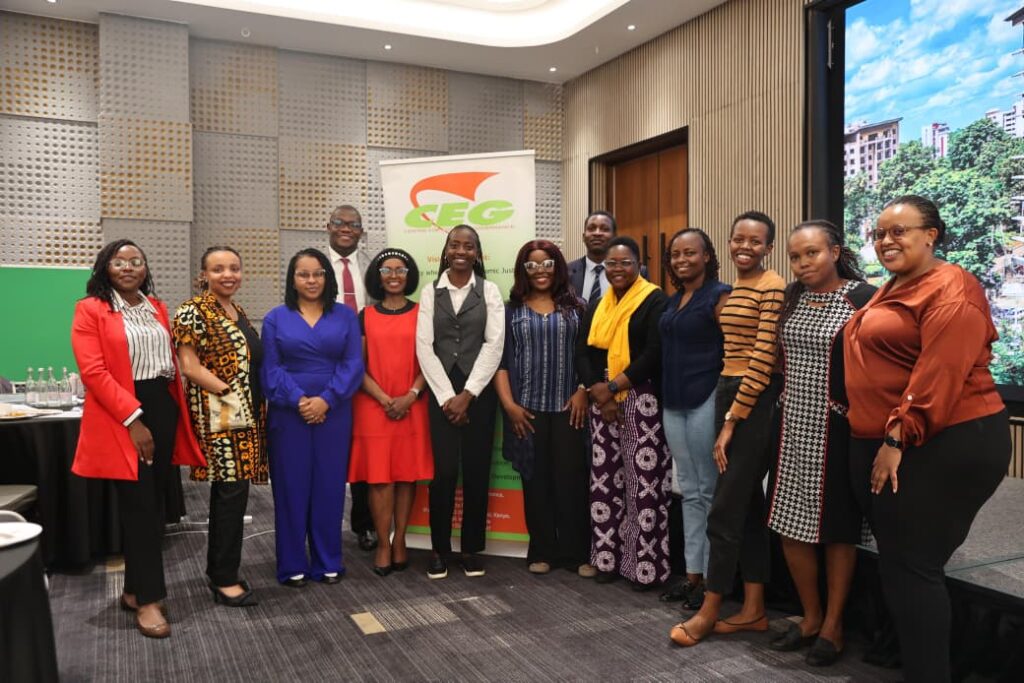
On 8–9 July 2026, the Centre for Economic Governance (CEG) co-convened a two-day Civil Society Strategy and Positioning Workshop in Nairobi on the United Nations Framework Convention on International Tax Cooperation (UNFCITC), alongside Oxfam Kenya, the Tax Justice Network Africa (TJNA), the Institute of Public Finance (IPF), and the Kenya Human Rights Commission (KHRC). The workshop brought together civil society, tax researchers, legal practitioners, the Kenya Revenue Authority (KRA), and development partners to build a coordinated Kenyan position ahead of the Intergovernmental Negotiating Committee’s (INC) fifth substantive session, opening in New York on 3 August 2026.
A sixth session follows in Nairobi this December — the first UNFCITC negotiating round to be hosted in Africa.
Why It Matters
International tax decisions ultimately reach the county level, shaping funding for education, health, and infrastructure. Despite years of growth, nearly half of Kenyans remain in extreme poverty — roughly 7 million having fallen into it since 2015 — even as the wealthiest 125 Kenyans hold more than 77% of the country’s wealth. Many governing rules of international taxation date to the 1920s, built for factories rather than digital platforms, and Africa loses close to US$90 billion a year to illicit financial flows — about 4% of the continent’s GDP, more than it receives annually in development assistance. The UNFCITC process, unlike the OECD-led system it complements, gives every country an equal formal vote.
Where the Negotiations Stand
The process traces to the African Group’s 2022 call for a UN tax instrument. Negotiators are now working across three parallel tracks: the Framework Convention itself, and two early protocols — one on the taxation of income from cross-border digital services, the other on prevention and resolution of tax disputes — all targeted for finalisation by 2027. A recurring concern raised throughout the workshop: countries could become bound by the framework convention while its substantive protocols remain unratified, echoing Kenya’s own five-year gap between signing and ratifying the OECD’s Multilateral Instrument.
Kenya’s Revenue Numbers
Research presented by the University of Nairobi’s Committee on Fiscal Studies (CFS) modelled Kenya’s cross-border services outflows (roughly US$5.8 billion in 2024) against its treaty network, finding Kenya can lawfully tax only around 60% of its taxable cross-border services base — leaving an estimated US$24–39 million uncollected annually, more than Kenya’s Digital Service Tax and Significant Economic Presence Tax have together collected to date. The proposed fix: anchor taxing rights to the location of the payer rather than the service provider, since a Kenyan business making a payment cannot relocate the way a service provider can restructure around treaty gaps.
Key Technical Threads
- Double taxation agreements (DTAs): With 17 DTAs in force, Kenya faces three options for reconciling them with the Convention — slow but sovereignty-preserving bilateral renegotiation, a faster multilateral “matching” instrument (modelled on the OECD’s MLI), or outright treaty override grounded in the principle that a later treaty prevails (lex posterior).
- Tax transparency: Kenya has improved on several exchange-of-information benchmarks since 2016, but timeliness of responses and analytical capacity to use the country-by-country reports it already receives remain weak points.
- High-net-worth individuals (HNWIs): One of the most contested fronts. The Global South position, drawing on a Brazilian G20 proposal, pushes for a coordinated global minimum tax on the world’s wealthiest individuals; the Global North favours information-sharing over binding minimum standards. HNWIs are estimated to hold 30–40% of untaxed offshore wealth.
- Transfer pricing: A panel of tax practitioners grounded the international debate in domestic realities — capacity gaps at KRA, multi-year Mutual Agreement Procedure cases, and the case for a shared, UN-built comparables database for Global South tax administrations.
From Technical Foundation to Strategy
Day Two converted this foundation into an article-by-article walkthrough of a draft Kenya CSO submission covering the Framework Convention and both protocols — recommending a treaty override provision to resolve conflicts with existing agreements, a strengthened Conference of the Parties, and a working definition of high-net-worth individuals calibrated to African realities.
Convened jointly by Oxfam Kenya, Tax Justice Network Africa (TJNA), the Centre for Economic Governance (CEG), the Institute of Public Finance (IPF), and the Kenya Human Rights Commission (KHRC).